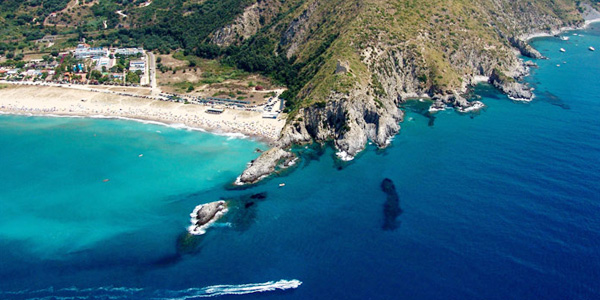
The coasts from Ascea to Agropoli
The Gulf of Ascea includes a large coastal territory that offers opportunities and entertainment of all kinds for seaside tourism. Kilometers of relaxing beach, free and equipped, alternate with fascinating rocky and stony coasts, ideal for diving and boat trips. Numerous seaside villages to visit: Marina di Ascea, Casal Velino (marina and capital), Pioppi, Acciaroli, continuing on the wonderful coastal road up to Castellabate and Agropoli with their historic corners.
Deepen you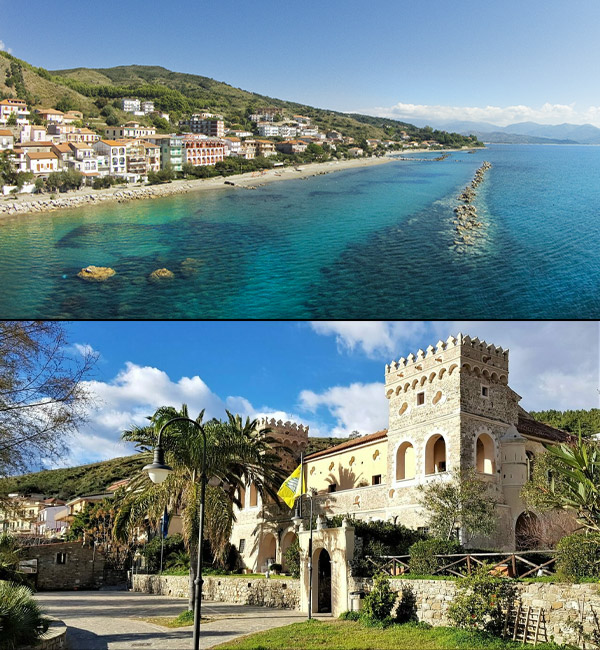
Pioppi di Pollica, home of the Mediterranean diet
Ancient fishing village, Pioppi is a seaside tourism destination, to experience a holiday in maximum relaxation in the name of "slow tourism", swimming in clean waters. Ideal for boat trips and underwater diving in a sea awarded for several years with the "Blue Flag" and with the "5 sails" of Legambiente.
In the center of the village of Pioppi, overlooking the sea, is the ancient Palazzo Vinciprova, with baroque lines and Moorish decorations with the volute features of a castle. The palace houses the Sea Museum and a permanent exhibition on the Mediterranean diet.
Undisputed protagonist the typical Cilento cuisine, with Km.0 raw materials from the sea and the land, in the restaurants of the village and in the surroundings a few minutes by car.
Deepen you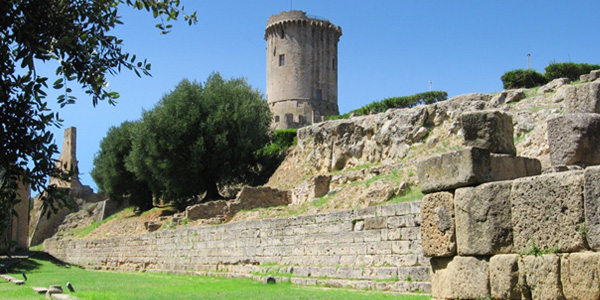
Archaeological Park of Elea Velia
The ancient Greek city of Helea, of great world historical value as it is the homeland of Parmenidean philosophy. In March 1965, the "Porta Rosa" was brought to light, the only testimony of an arch in Greek architecture. Do not forget the "Torre Angioina", symbol of the surrounding territory, which rests on the blocks of the Temple of Athena and on the acropolis of the ancient city.
Deepen you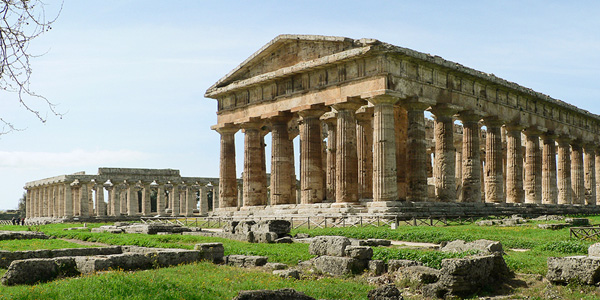
Archaeological park of Paestum, the temples and the museum
Ancient city of Magna Grecia founded with the name of Poseidonia in the VII BC, still shows the great wealth of its past.
Deepen you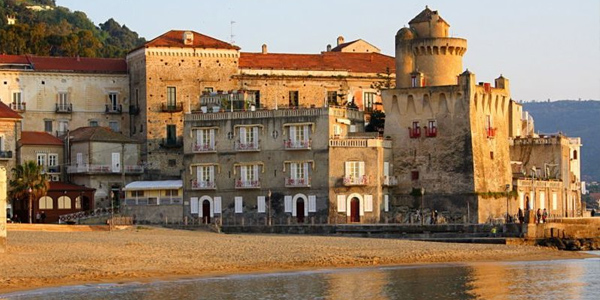
Castellabate
The ancient center has preserved, intact, the plant of typical medieval citadel, on which some noble houses dating back to the seventeenth century have grafted: in particular the Palazzi Perrotta and Iaquinto, which deserve a visit for the large amount of works of art they host.
Santa Maria di Castellabate is the largest fraction, extremely appreciated tourist destination, it is home to a protected marine area. To visit, the spectacular Punta Tresino, gateway to the Cilento Park.
The name of the village has become famous throughout Italy with the films "Welcome to the South" (2009) and "Welcome to the North" (2012) by Luca Miniero.
Deepen you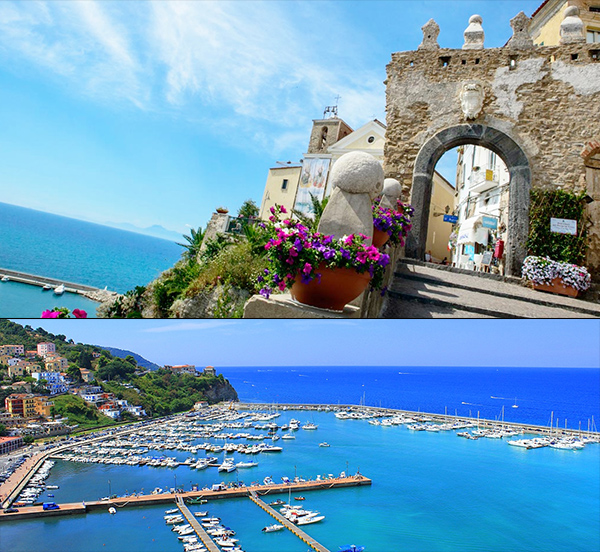
Agropoli
An important cultural attraction is the Angioino-Aragonese Castle, which stands majestically in a strategic position on the promontory overlooking the city. Built on a Byzantine plant of the VI century AD it is an unmissable stop. Of great suggestion is the walk in the historic center (with the possibility of visiting the Church Madonna di Costantinopoli, the Church of SS. Pietro and Paolo and the Chapel of Addolorata) which preserves its original structure with its maze of streets and a breathtaking view of the sea.
The crystal clear waters of the Baia di Trentova and the coast in front of the Lungomare San Marco make Agropoli one of the locations awarded every year with the "Blue Flag FEE" recognition which certifies the cleanliness of the seas, the safeguarding of the environment and the efficiency of services to tourism.
Don't miss a walk to the tourist port with about 1000 berths, the largest south of the Province of Salerno, to admire a suggestive panorama that expands on the promontory of the ancient village.
Deepen you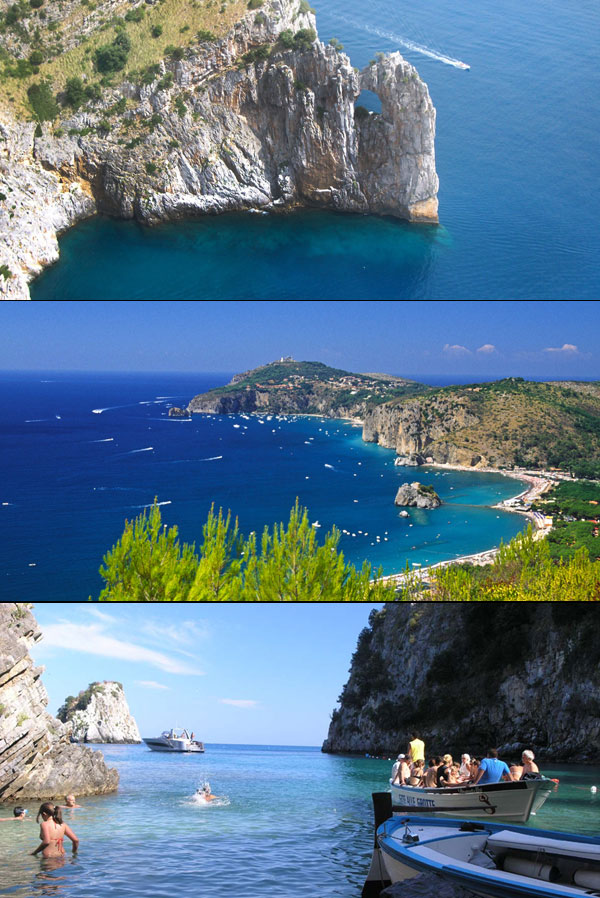
Capo Palinuro
Palinuro is a seaside center known internationally, which looks like a limestone spur stretched out in the southern Tyrrhenian Sea lying between the greenery of the hills covered with olive trees and a blue and clean sea. We are in the heart of the Cilento and Vallo di Diano National Park (UNESCO Biosphere Reserve). Numerous and beautiful beaches, some sandy others rich in rocks, some located in the center of the village others reachable only by boat.
The Bay of Buondormire, with its crystal clear waters, certainly has one of the most romantic beaches on the coast. A masterpiece shaped by nature is then the Natural Arch, with the long beach and the nearby mouth of the Mingardo River. Diving into the seabed of Capo Palinuro is one of the most exciting experiences you can experience in Cilento: the unspoiled sea contains, in fact, an unimaginable treasure of flora and fauna.
Multiple times Blue Flag for the bathing of the coasts, Palinuro has also obtained the Green Flag for its beaches, listed among the best in Italy for families with children. The spectacle of the coast is also fascinating, which is frayed in a continuous underwater caves, coves and heads, all to be discovered.
The sea caves of Capo Palinuro
As many as 35 caves and submerged caves make Capo Palinuro one of the main poles of the Speleomarino of the Mediterranean.
• Blue Grotto: The best known among the caves of Capo Palinuro and also the most visited. Thanks to an underwater tunnel, in which sunlight penetrates, it generates the characteristic color from which it takes its name.
• Blood Cave: The cavity has walls rich in iron, which, coming into contact with seawater, turns a deep red.
• Monks' Cave: Like the other caves, it is rich in stalactites and stalagmites including some that seem to form small monks in prayer.
• Silver Cave: It is the smallest of the caves that are generally visited during boat trips. Its walls covered with limestone accumulations create a beautiful light effect, making the sea silver.
• Sulfur Cave: It is the only one that can be visited only externally, but no less characteristic due to the presence of a sulfur source with an unpleasant smell.
Deepen you
Marina di Camerota, Costa Infrechi and of the Masseta
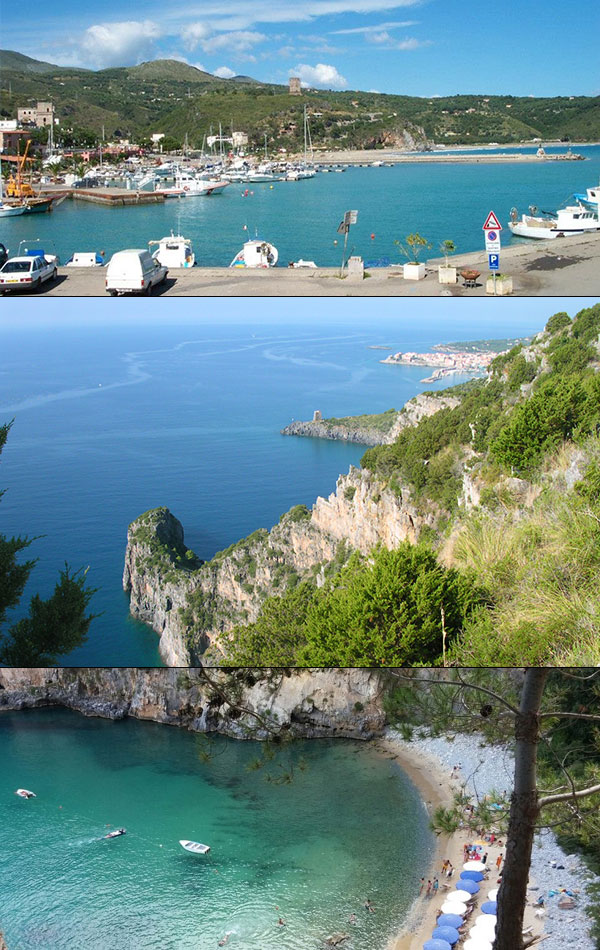
Marina di Camerota is a daydream, a meeting, a succession of beach, coves, cliffs and seabeds of incredible clarity, set between two small promontories surmounted by sighting towers.
Lovers of the rocky coast with its characteristic inlets and beaches Costa di Marina di Camerota stolen from the sea can quickly reach the beach of the natural arch in the territory of Capo Palinuro or focus on the south of the Camerotese coast and go towards tip of the Infresque , one of the most uncontaminated stretches of Italy, where nothing was built.
The Cala Bianca beach in Marina di Camerota is considered one of the most beautiful in Italy, the water is crystal clear and the seabed are a paradise for divers.
The Pozzallo beach has a small restaurant camouflaged in the greenery that offers all kinds of comfort and a tasty lunch, with a typical menu of the Cilento tradition, to bathers.
Deepen you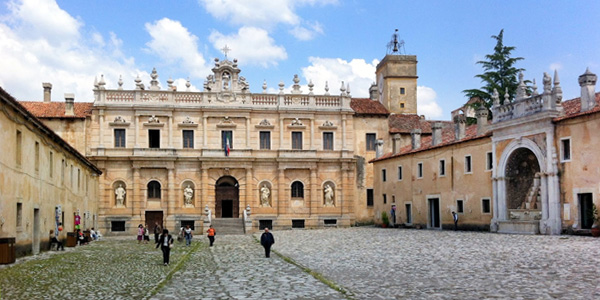
Certosa di Padula
The Certosa di San Lorenzo is the largest charterhouse in Italy, second in Europe, and is located in Padula, in the Vallo di Diano, in the Province of Salerno. In 1998 it was declared a UNESCO World Heritage Site. The monastery has the largest cloister in the world (about 12,000 square meters) and is surrounded by 84 columns. A large spiral staircase, made of white marble, leads to the convent's large library. The main part of the Charterhouse is in Baroque style and occupies an area of 51,500 square meters on which more than 320 rooms are built.
Deepen you